
Architecture
Platform Architecture and Technology
A layered architecture designed for enterprise-grade AI that reasons, acts, and explains — across any vertical, in any deployment model.
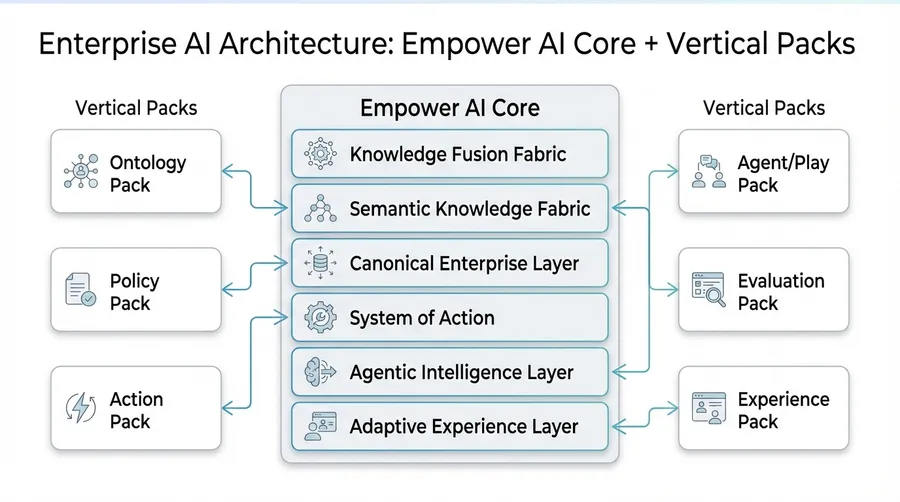
Horizontal Core, Vertical Packs
The architecture separates the universal platform core from vertical-specific customization — the foundational design principle that enables Empower AI to serve any enterprise domain from a single governed runtime.
- One governed runtime for any enterprise domain — The horizontal core provides the semantic fusion fabric, reasoning engine, governance framework, and execution layer.
- Vertical Packs define domain-specific semantics (ontologies and taxonomies), policies (rules and constraints), actions (system integrations), plays (workflow patterns), evaluations (quality metrics), and UX (user-facing interfaces).
- Ship new verticals by packaging — not rewiring the platform. Each new industry or use case is a configuration, not a rebuild.
Semantic Knowledge-Operations Fabric
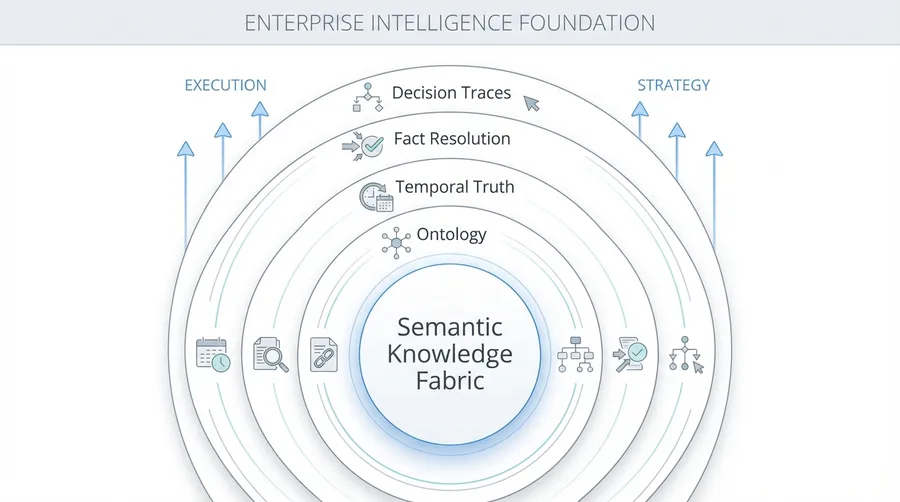
The Semantic Knowledge-Operations Fabric is the grounding layer that gives Empower AI its ability to understand — not just retrieve.
- Ontology-grounded semantic graph — Domain knowledge is represented as structured ontologies, not flat text chunks.
- Entity resolution — Shared meaning across sources. The system resolves entities across disparate datasets to create a unified representation.
- Temporal truth and provenance — Every fact carries its source, timestamp, and lineage.
- Fact resolution across sources — When sources contain conflicting information, the semantic fusion fabric resolves contradictions through provenance-aware reasoning.
The Decision Trace Pipeline
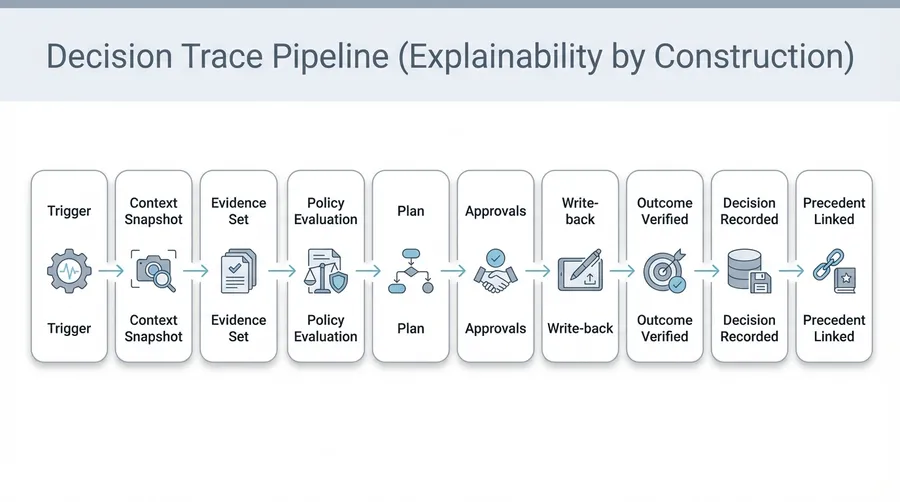
Empower AI does not bolt on explainability after the fact. Every recommendation, decision, and action is explainable by construction.
Every action carries a complete trace:
- Trigger — What initiated the decision (user query, scheduled task, event, or upstream agent)
- Context — The knowledge, data, and state the system considered
- Evidence — Specific sources, citations, and data points that support the conclusion
- Policy — Which governance rules and constraints were applied
- Approvals — Who reviewed and approved (human or automated gate)
This trace is replayable and auditable by default. Any decision can be reconstructed to show exactly what the system saw, how it reasoned, and why it reached its conclusion.
Knowledge Accretion: The Compounding Advantage
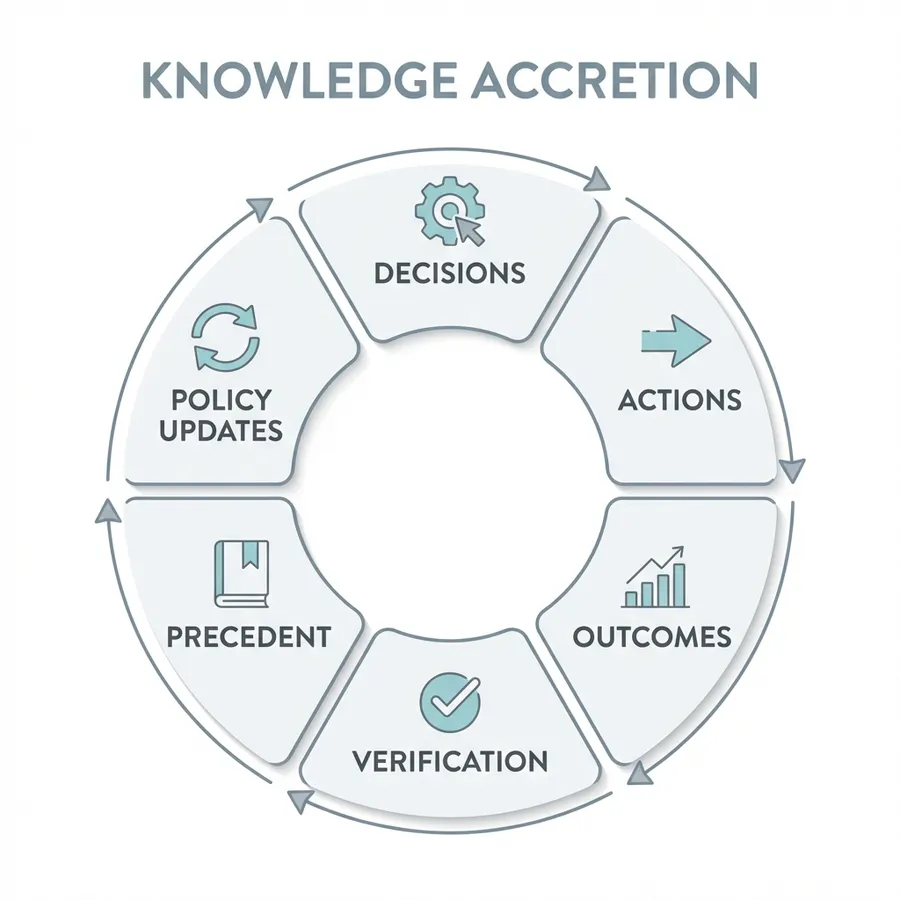
Unlike systems that start from zero with every query, Empower AI accumulates institutional knowledge over time.
- Outcomes feed back into precedent and policy refinement. Each resolved case enriches the platform's understanding.
- Better decisions over time — measurably. The system tracks decision quality and uses outcomes to improve future reasoning.
- Institutional knowledge becomes searchable and reusable. Tribal expertise, historical decisions, and domain-specific patterns are captured and preserved.
This creates a compounding advantage: the longer the platform operates, the more valuable it becomes.
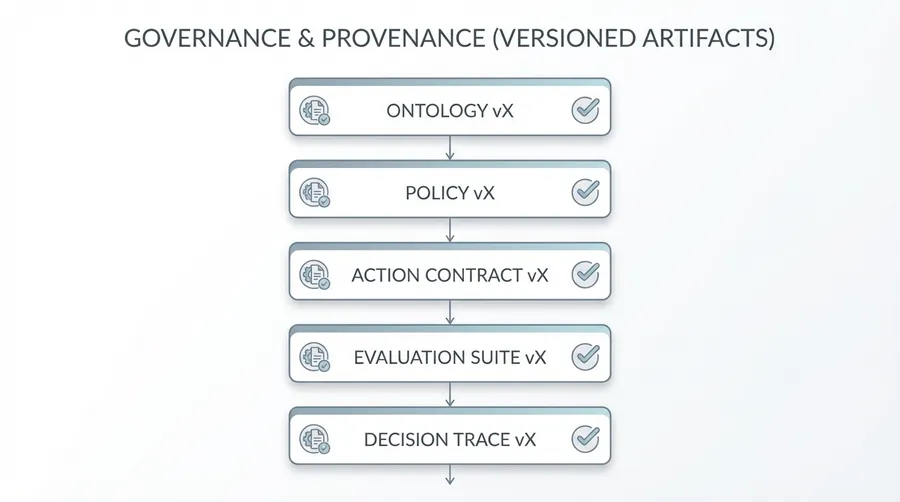
Governance and Provenance
Enterprise AI requires governance that scales with autonomy. Empower AI provides:
- Versioned ontology, policy, action contracts, and evaluation suites — Every component is versioned and tracked.
- Signed changes and audit trails — For compliance readiness across regulated industries (GxP, HIPAA, CMS, FDA).
- Safe evolution without breaking production autonomy — Updates are managed through controlled releases.
Multi-Agent Orchestration
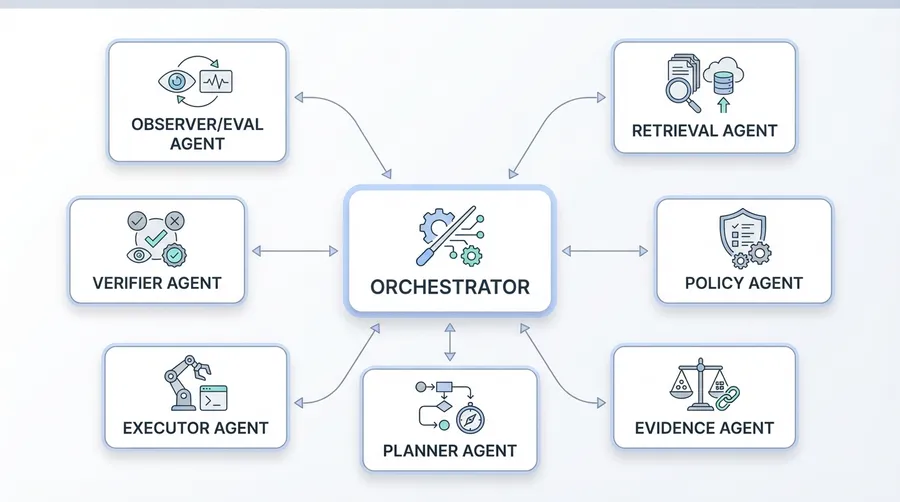
Empower AI uses a specialist-agent architecture rather than monolithic models.
- Orchestrator routes tasks to specialist agents — Each agent handles a specific capability: retrieval, policy evaluation, planning, execution, or verification.
- Separation of duties — Decomposing complex tasks into specialized steps reduces hallucinations and increases reliability.
- Composable agent pipelines — New capabilities are added by composing agents, not by retraining or rebuilding.
Enterprise Integration: Read and Write
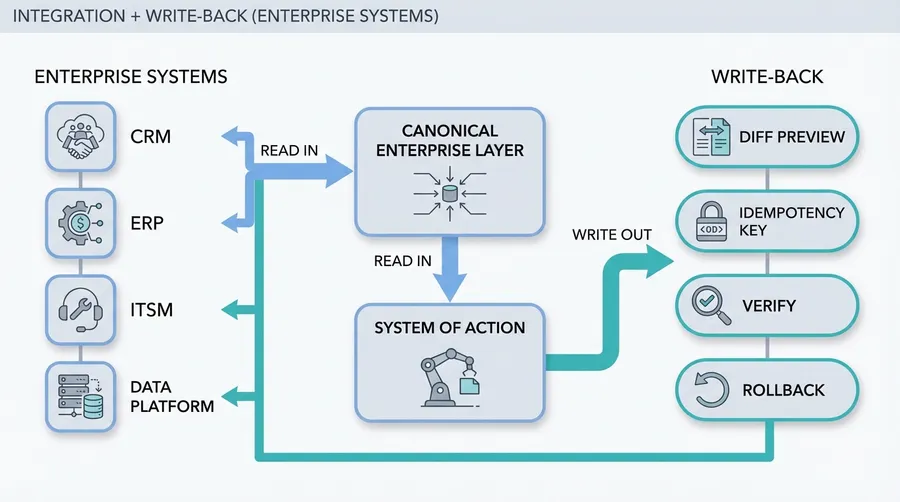
Empower AI is not limited to answering questions — it safely interacts with enterprise systems.
- Canonical enterprise layer — Normalizes data and operations across disparate systems (CRM, ERP, QMS, LIMS, CTMS, ticketing, and more).
- Typed Action Registry — Safe connectors with defined contracts for every write-back operation.
- Idempotent, verifiable, and reversible writes — Write-backs use diffs, idempotency keys, and verification checks.
- Policy gates, approvals, and exception routing — Every action passes through governance checks before execution.
Deployment Flexibility
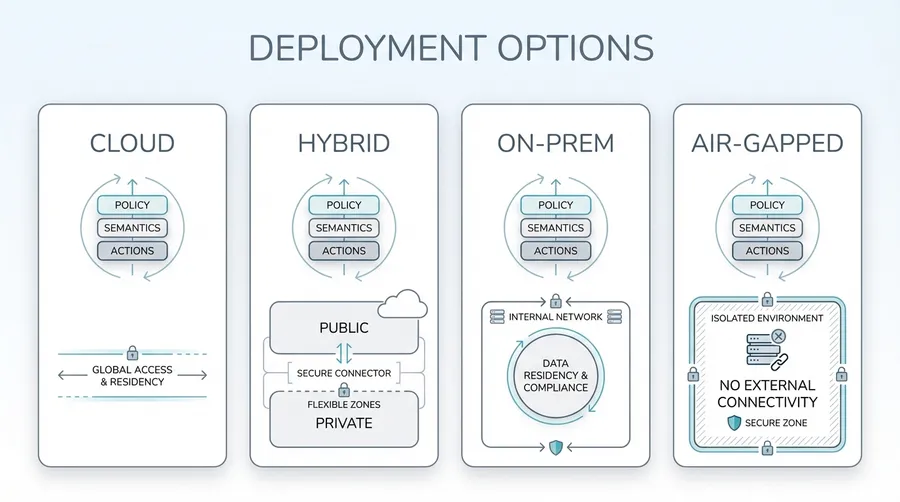
The same semantics, policies, and governance apply regardless of where the platform runs.
- Cloud, on-premises, or air-gapped deployments — Same platform, same behavior.
- Data residency and security constraints — Supports regulatory requirements for data locality and isolation.
- Private cloud operation — No data leaves the customer's environment. No external LLM dependencies required.
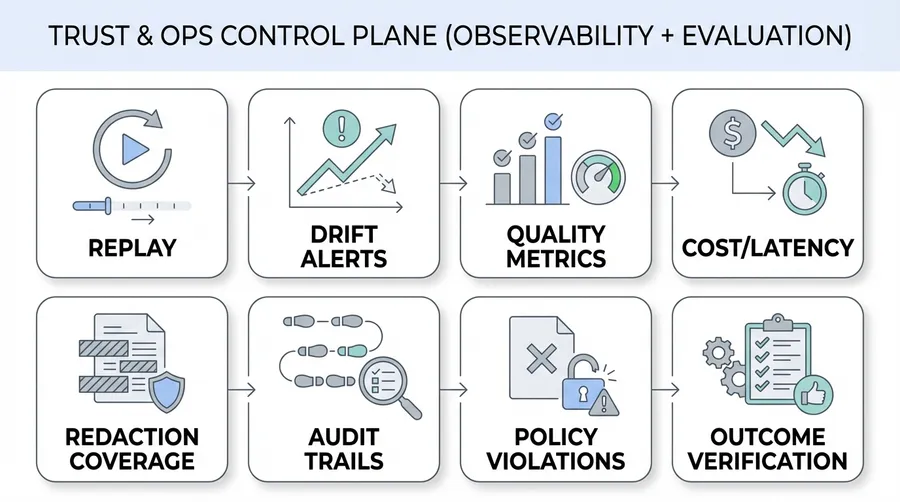
Trust and Ops Control Plane
Production AI requires operational visibility. The Trust and Ops Control Plane provides:
- Replay and drift detection — Monitor for changes in input patterns, output quality, or behavior over time.
- Evaluation suites — Continuous assessment of reasoning quality, evidence coverage, and policy adherence.
- Cost and latency monitoring — Operational metrics for production agents.
- Outcome verification — Track whether actions achieved their intended results.
- Policy violation alerting — Immediate notification when agents approach governance boundaries.
Empower AI vs. Conventional Approaches
| Dimension | LLMs / RAGs | Empower AI |
|---|---|---|
| Knowledge | Flat context windows; unstructured text fragments | Semantic fusion via ontology-grounded graphs |
| Reasoning | Pattern completion; correlational | Structured, causal, multi-hop, evidence-based |
| Data | Text chunks or embeddings | Full multimodal integration (structured + unstructured) |
| Actionability | Conversational only | Declarative agentic execution with write-backs |
| Explainability | None or token-level logs | Full provenance, citations, audit trails, decision traces |
| Speed | Weeks to months | Days (instant-on Knowledge Fusion Core) |
| Maintainability | Manual reindexing | Continuous ingestion, semantic versioning |
Ready to see it in action?
Request a demo to explore how Empower AI can transform your enterprise.