
Healthcare has spent a decade consolidating. PE-backed platforms, 503B outsourcing networks, CDMOs, specialty pharma, and laboratory networks have all grown the same way — by acquisition. The result is a new kind of organization: a single operating network made of many companies, each with its own facilities, its own quality history, and its own way of running.
The financial thesis behind that growth almost always assumes operational leverage. Buy more sites, standardize how they run, and the network produces more margin than the companies could alone. But there is a quiet problem inside nearly every one of these platforms: operational excellence does not travel. The best site solves a problem the others keep re-solving. The knowledge that makes one facility exceptional stays locked inside it. And every acquisition restarts the standardization clock from zero.
The networks that win the next decade will be the ones that fix this — by treating operational understanding as a portable, compounding asset that lives above their systems of record, not inside any one of them.
Consolidation Built the Network. It Didn’t Build the Operating Model.
Roll-ups are good at adding revenue. They are far less good at adding operating coherence. Each acquired company arrives with its own ERP, its own eQMS, its own LIMS or MES, its own SOPs, and a workforce that knows how things are really done in ways no document captures.
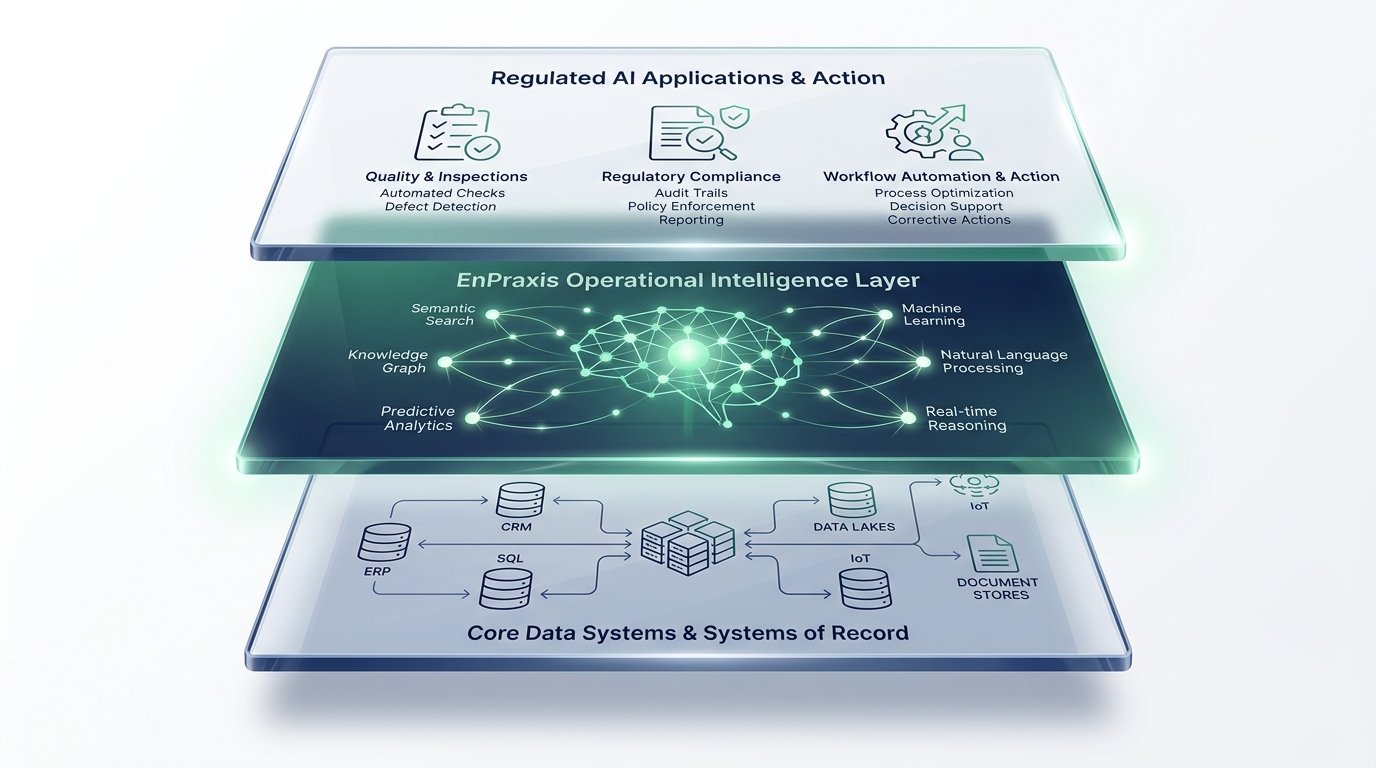
The org chart says one company. The operations say a dozen. Leaders end up managing the network by site visit, spreadsheet, and the memory of a few key people. Visibility fragments exactly as the portfolio grows — and operational risk concentrates in the companies leadership understands least.
You can consolidate ownership in a quarter. Consolidating how the network actually operates is the work that quietly decides whether the thesis pays off.
The Hidden Cost of Acquisitions
The visible cost of an acquisition is the purchase price. The hidden cost is integration drag — the months it takes before a new company runs to network standard, and the operational risk that hides in the gap.
Every deal restarts the same motion: learn how this company actually operates, find where it diverges from the rest of the network, surface its quality and operational risks before they become surprises, and push the network’s proven practices into it. In most platforms that motion is manual, consultant-led, and slow. It depends on flying experts to sites and reading binders. The integration tail stretches, synergies slip, and the next acquisition starts the whole process over.
The deeper cost is opportunity. While a new site is being slowly understood, the excellence already proven elsewhere in the network is sitting idle next door — invisible and unreused.
Traditional Systems vs. Intelligence
It is tempting to believe the systems of record already solve this. They do not — and they were never meant to.
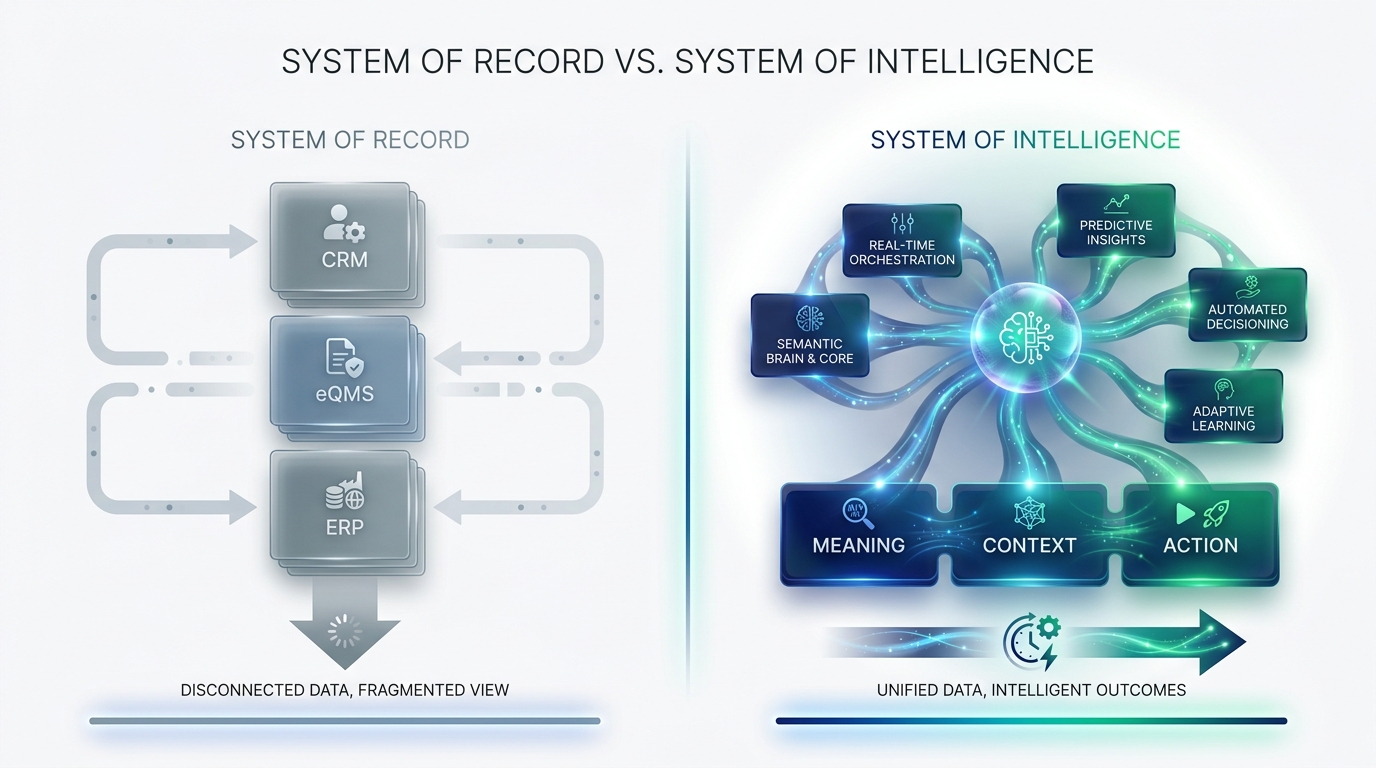
eQMS, ERP, LIMS, and MES are essential. They are also, increasingly, commodities — every platform has them, and they store what each site filed. A system of record answers what was recorded, here, in this system. It does not answer the questions operating leaders actually lose sleep over:
- Is this site’s operation defensible, and is it improving?
- Where does excellence already live in the network, and why can’t the other sites use it?
- What risks are hiding in the company we understand least?
- How fast can the next acquisition reach network standard?
Those are questions of understanding, not storage. A record tells you what happened at one site. Intelligence tells you how the network runs and what to do about it.
Systems of record hold what each site filed. A system of intelligence reads across all of them and makes excellence portable.
The Operational Intelligence Layer
The new source of advantage is a system of intelligence that sits above the systems of record — reading across every company’s data, documents, and tribal knowledge, and building a governed model of how the network actually operates.
It works in four moves. It captures the records and knowledge each company already holds, without a data warehouse or rip-and-replace. It understands them as reasoning — how a site operates and why a position holds — not just storage. It standardizes the best operating practice into something explicit and portable. And it compounds: every facility and every acquisition adds to a shared operating intelligence the whole network draws on.
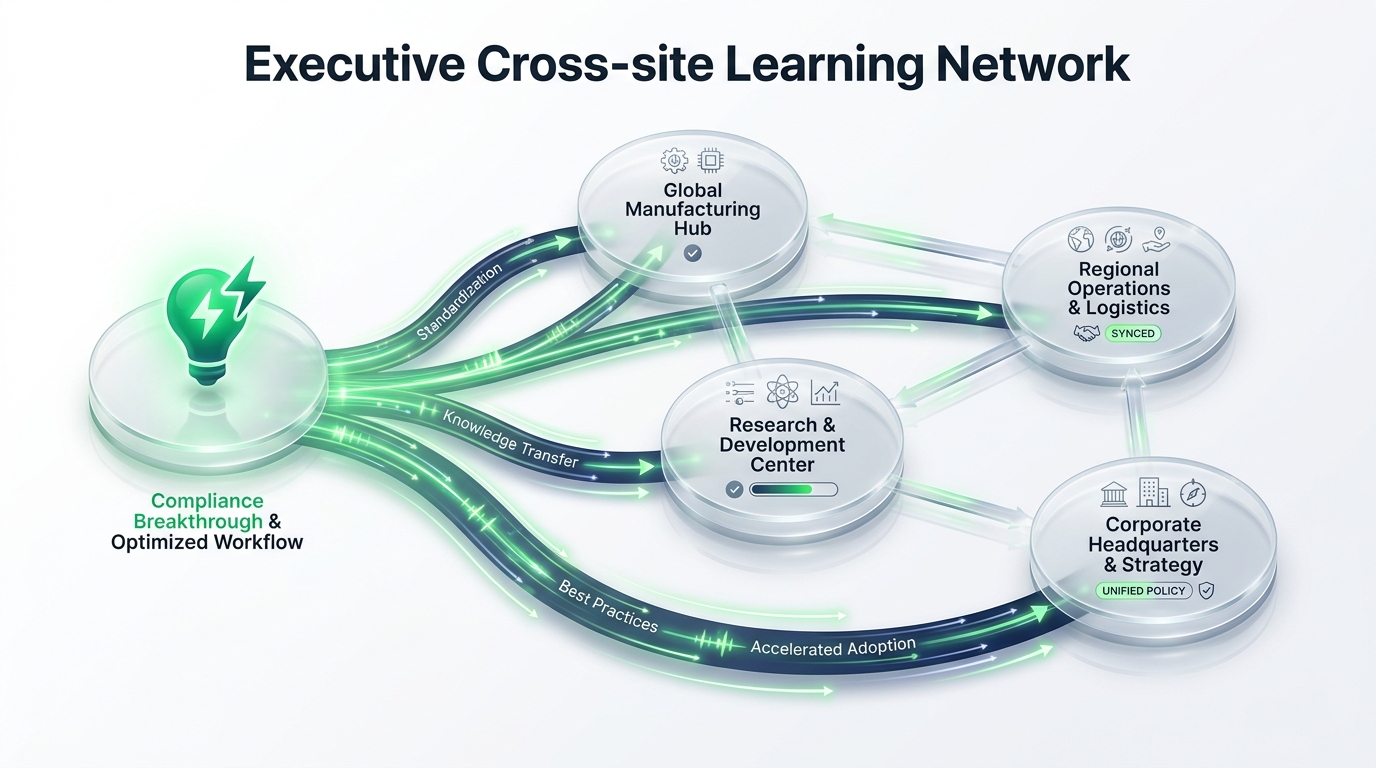
This is what turns an acquisition flywheel from an aspiration into a mechanism. Each new company is mapped to the network operating model in weeks, its risks surfaced before close-out, proven practice deployed into it quickly, and what it does best fed back into the shared intelligence the next deal inherits.
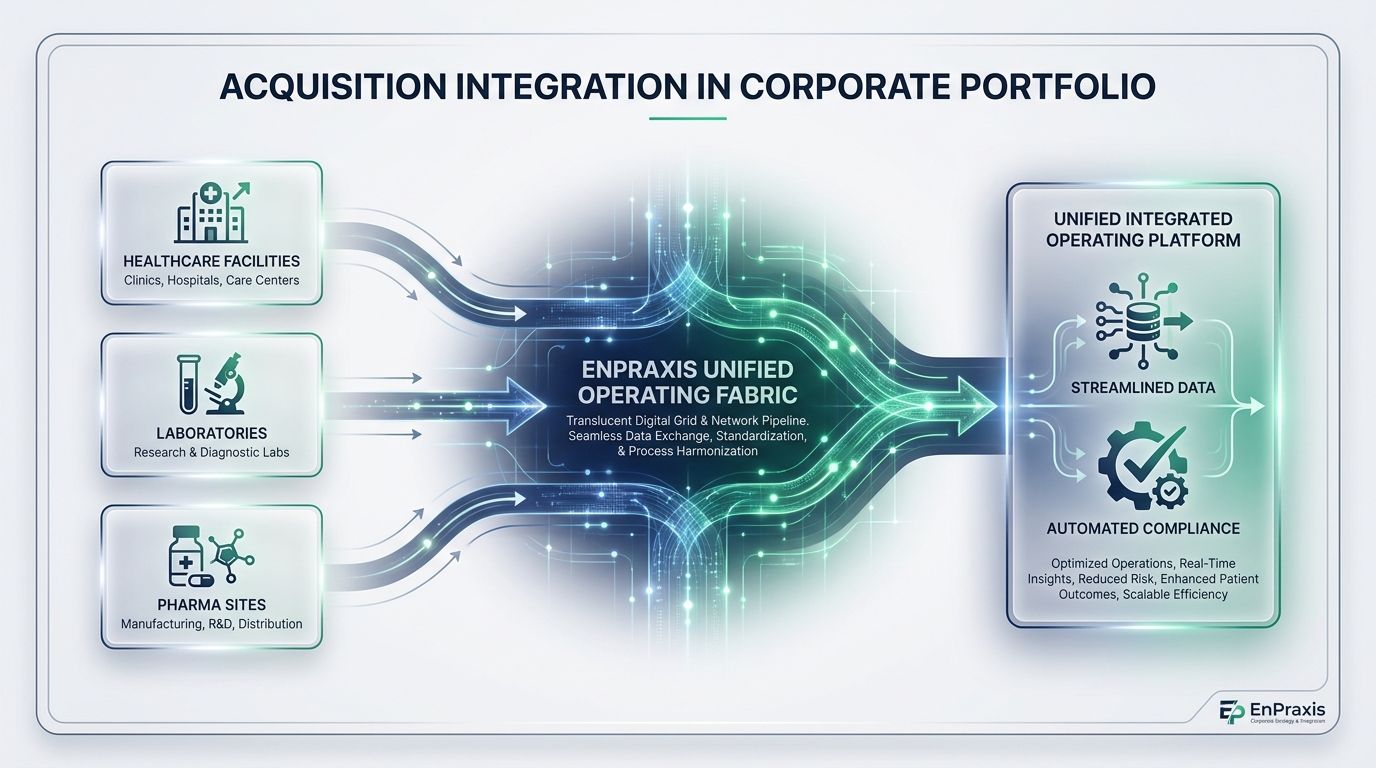
The flywheel turns faster with every acquisition, because every acquisition makes the network smarter — not just bigger.
EBITDA & Enterprise Value
For a multi-company platform, operational intelligence is not overhead. It is an EBITDA and enterprise-value lever, and it shows up in four places.
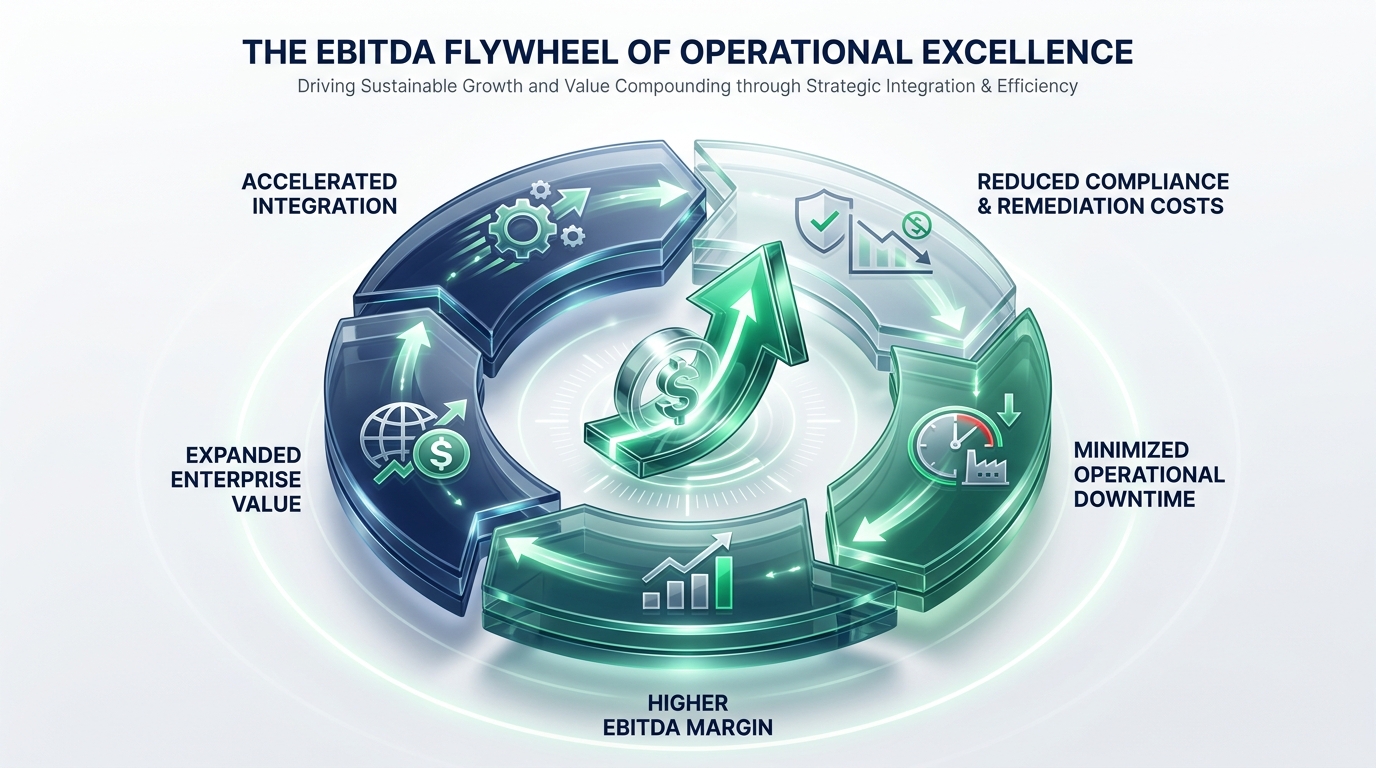
- Protected margin. Fewer recurring failures, less rework, and faster recovery from operational and quality events — margin defended at every site, not just the strongest one.
- Lifted laggards. The fastest EBITDA gain in any platform is closing the spread between sites. Pulling bottom-quartile facilities toward top-quartile performance, using the network’s own proven practices, is pure operating leverage.
- Faster synergy capture. Integration measured in weeks compresses the standardization clock, pulling deal synergies forward and shortening the value-creation tail.
- De-risked diligence. Operating excellence that is documented, traceable, and defensible becomes a multiple story at exit instead of a diligence liability.
The same network, with the same assets, produces more margin and carries less hidden risk into a transaction. That is the difference between owning a collection of companies and owning an operating network.
The CEO and Operating Partner Perspective
For a CEO or operating partner, the prize is a portfolio that is legible at a glance and defensible under scrutiny — without flying to every facility to find out how it runs.
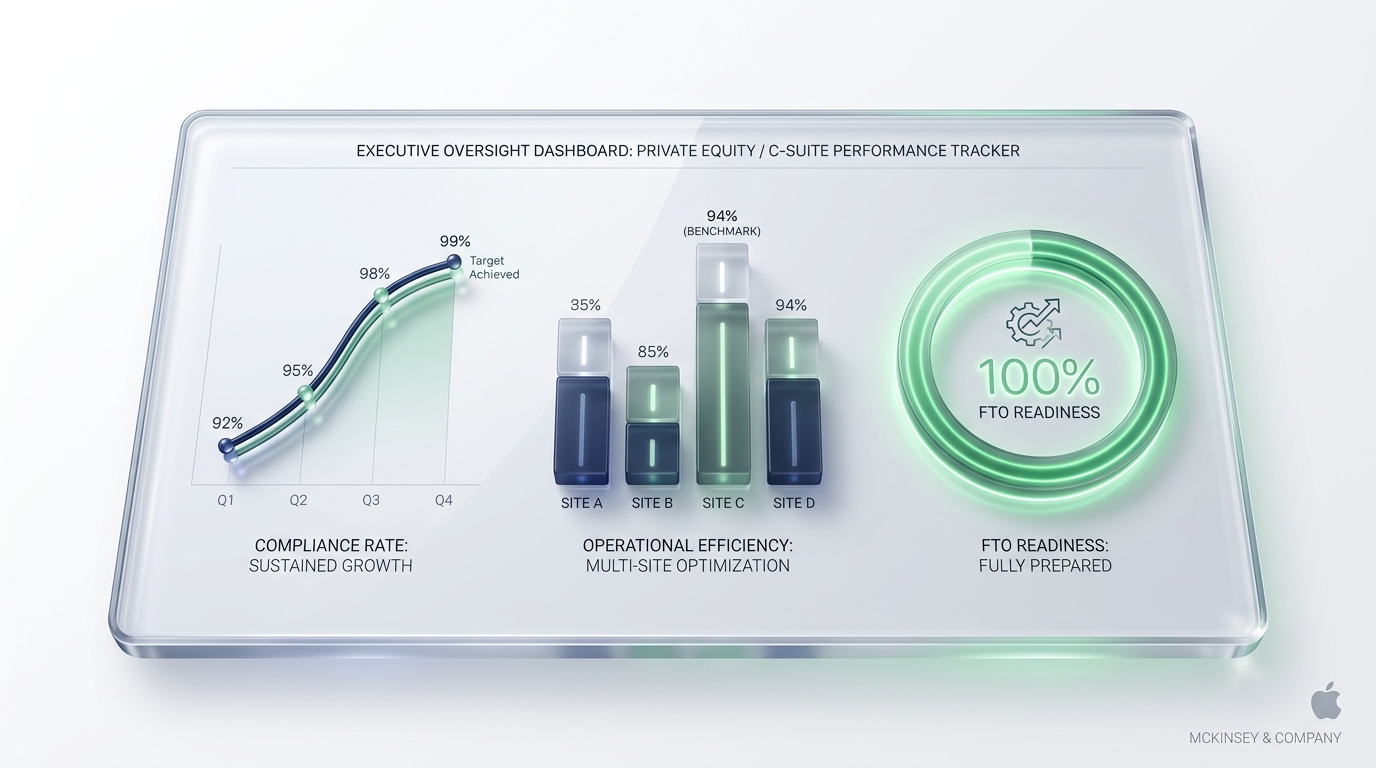
That means one network-wide view of how every company operates, where excellence lives and where risk concentrates, which sites lead and which lag, and what to do next. Not a wall of record-keeping metrics — an operating picture that traces from signal to evidence to the proven practice that closes the gap. A decision, not just a number.
It also changes the acquisition conversation. When the operating model is explicit and portable, the integration plan stops being a leap of faith and becomes a repeatable motion the team has run before.
The Quality Perspective
None of this works if it sits apart from quality — and in regulated healthcare networks, quality is operations. A chief quality officer in a multi-site network carries a hard version of the same problem: every facility has its own deviation history, its own CAPA backlog, its own investigations, and its own accreditation posture, and harmonizing them is a permanent pressure.
A system of intelligence treats those quality records the way it treats the rest of operations — as reasoning to be understood and learning to be shared, not paperwork to be stored. Recurring causes surface across the whole footprint. A position taken at one site carries its evidence and reasoning, ready for a regulator, an auditor, or a buyer. And the best quality practice in the network becomes portable instead of trapped.
The result is the rare combination operating networks are usually told to trade off: faster standardization and stronger defensibility, at the same time.
Future Outlook
The consolidation wave built the networks. The next wave will sort them by how well they operate as networks rather than as holding companies. Two platforms with identical assets will diverge sharply depending on whether operational excellence travels between their sites or stays stranded inside them.
The advantage is available now, and it does not require clean data or a multi-year transformation to begin. It starts from the records and knowledge each company already holds, and it compounds with every site and every deal. The platforms that treat operational understanding as a portable, governed, compounding asset — a system of intelligence above their systems of record — will integrate faster, defend margin better, and carry a stronger story into every transaction.
That is the new source of competitive advantage for healthcare operating networks. The question for each platform is simply whether it builds that intelligence layer deliberately, or keeps paying the hidden cost of doing without it.
Explore the Operating Networks pathway — how to make operational excellence portable, protect EBITDA, and compress acquisition integration across your network.